face is name recognition.Which is why we want to promote you as part of our better service
guarantee. Any videos submitted to our Facebook or Twitter listing our products being used will be
added to our website and blog where thousands can see it.
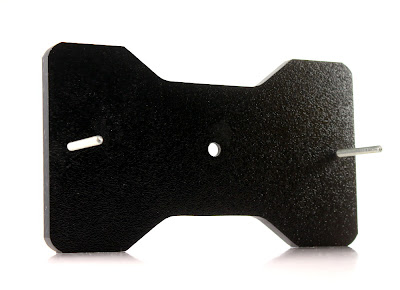
You're probably asking yourself why we chose to start off our DIY stabilizer build series with a part that seems so simple. Just strap on a plate with some weights and move on right? This is a part that regularly gets neglected, both in DIY rigs and Commercial stabilizers as well. The base plate actually serves several key functions, so in the quest for a more stable rig spending some time on the design of your base plate is well worth it. Its the mounting point for your Counter-Weights If designed it can be used as a stand for smaller rigs It controls the inertia of the stabilizer - Key factor Material Anything from wood to plastic to metal works as long as it's strong enough. It needs to be able to support the counter-weights, and if you plan on using it as a stand keep the stabilizer upright. We prefer to use ABS plastic sheet because it's both strong and light weight. If you go with a 3/8" thick sheet like we offer in our D...
Canon lovers have long enjoyed the 50mm lens, so much so that they nicknamed it the Nifty Fifty. Over the years Canon has come out with a few variations of it. We're going to compare two of those, the Canon EF 50mm F/1.8 II , and the Canon EF 50mm F/1.8 STM . Both lenses are of course 50mm, have an aperture of 1:1.8, and lack image stabilization, so we're going to focus more on the differences between the two in this blog post. Lens mount - [Winner] Canon EF 50mm F/1.8 STM Canon EF 50mm F/1.8 STM: Metal Canon EF 50mm F/1.8 II: Plastic Starting with the painfully obvious difference between the two, the Canon EF 50mm F/1.8 STM features a metal lens mount, which means it'll hold up a lot longer when it comes to users that switch lenses on a regular basis. If you're the type that sticks with just one lens, I wouldn't consider this a deal breaker. Aperture blades - [Winner] Canon EF 50mm F/1.8 STM Canon EF 50mm F/1.8 STM: 7 blades Canon EF 50mm F/1.8 II: 5 blades...
Did you know? The origins of Image Stabilization for 35mm DSLR lenses dates back to the EF 75-300mm 4-5.6IS USM lens released by Canon back in September of 1995. These lenses predated the mainstream adoption of digital technology by a long shot, but pioneered the way for many more to come. In 1995 you could buy an EOS DCS 3, but it was only a 1.3MP camera and would cost you around $20,000, so needless to say many continued to use film at that time. Because Canon developed the technology prior to mainstream DSLR adoption, putting stabilization in the lens made the most sense. The only other way it could have been done would be to physically move the 35mm film up and down/left to right to counteract vibrations, which would be an engineering nightmare. The system Canon developed works by physically moving elements inside the lens to counteract any vibrations in the camera body. Utilizing a lens with image stabilization allows you to ...



Comments
Post a Comment